When Your AC Stops Mid-Summer: What to Check Before Calling Anyone
A few minutes of checking the obvious can save you a service call, and knowing when to stop keeps you from making things worse.
August 18, 2026 · 4 min read
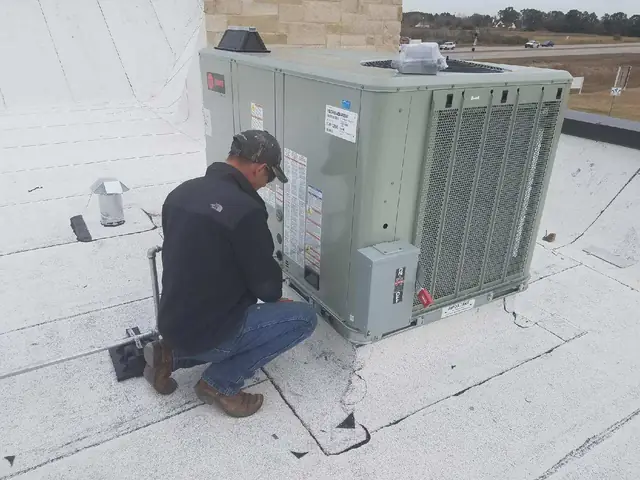
It is 98 degrees outside. You walk in from the garage, and the house is warm. The thermostat reads 84 and climbing. The AC is not running. This happens to somebody in The Woodlands every single day between May and September, and the instinct is to call for help immediately. That is fine. But there are a handful of things you can check yourself in under ten minutes that might get you back in business without waiting for a truck.
Check the Thermostat First
It sounds obvious, but thermostats cause a surprising number of "my AC is broken" calls. If yours runs on batteries, swap them. If someone bumped the mode switch from COOL to OFF or HEAT, flip it back. Set the fan to AUTO, set the temperature five degrees below what the house reads, and wait two minutes. If nothing happens, move on.
The Breaker and the Disconnect
Your air conditioning system sits on at least two breakers: one for the indoor air handler or furnace, one for the outdoor condenser. Both live in your main electrical panel. If either has tripped, reset it once. If it trips again immediately, leave it off and call a technician. A breaker that keeps tripping is doing its job. Something downstream is pulling too much current, and forcing it closed is how electrical fires start.
There is also a disconnect box mounted on the wall near your outdoor unit, usually a gray metal box with a pull-out handle or a small breaker inside. Make sure it is engaged. Lawn crews occasionally bump these, and a disengaged disconnect kills the condenser with no error code and no warning.
Look at the Air Filter
Pull the filter out and hold it up to a light. If you cannot see light through it, the filter is choked. A clogged filter starves the evaporator coil of airflow, which drops the coil temperature below freezing, which builds a block of ice on the coil, which blocks airflow even more. The system protects itself by shutting down.
If you find ice on the indoor coil or the copper line running to the outdoor unit, turn the system to FAN ONLY for a few hours and let it melt. Do not try to chip it off. Once the ice is gone, put a clean filter in and try cooling again. If it freezes a second time, the problem is deeper than the filter: low refrigerant charge, a failing blower motor, or a restricted metering device. That is technician territory.
The Outdoor Unit
Walk outside and look at the condenser. The fan at the top should be spinning. If it is not running and the system is calling for cooling, the contactor or the fan motor may have failed. Listen for a humming sound. A hum with no fan spin usually means the capacitor is dead. This is one of the most common summer failures in Texas because capacitors degrade faster in sustained heat. A technician can swap one in fifteen minutes.
While you are out there, check that the unit is not buried in landscaping. Condenser coils reject heat by pulling air through the fins. If bushes, fence panels, or stored equipment are pressed against the unit, it cannot breathe. Keep two feet of clearance on all sides.
The Drain Line
Your AC pulls moisture out of the air as it cools it. That water drains through a PVC line, usually to a floor drain or out through an exterior wall. If the line clogs with algae or dust, the drain pan fills up and a float switch shuts the system off to prevent water damage. You can usually find the cleanout port on the drain line near the indoor unit. A wet/dry vacuum on the outdoor end of the line, or a cup of plain white vinegar poured into the cleanout, clears most minor clogs.
When to Stop and Call
If you have checked all of the above and the system still will not start, or if it starts and blows warm air, or if you hear grinding, rattling, or a sharp electrical smell, stop troubleshooting. You have already ruled out the homeowner-serviceable items. What remains is internal to the equipment: a failed compressor, a refrigerant leak, a burned control board, a wiring fault. These require gauges, meters, and someone who works on them every day.
- Breaker trips a second time after resetting: stop, call.
- Ice returns after melting and replacing the filter: stop, call.
- Burning smell from any component: shut off the system at the breaker and call immediately.
- Outdoor unit hums but nothing spins: likely a capacitor, safe to leave off until the tech arrives.
- Water pooling around the indoor unit and the drain line is clear: the evaporator coil or drain pan may be cracked.
AOT Mechanical has been handling these calls across The Woodlands since 2009. If you have worked through the list above and the system is still down, call (281) 883-9972. Residential, commercial, or mobile home, the crew will get to you.
AOT Mechanical · (281) 883-9972
Call (281) 883-9972More articles
Why Backup Generator Sizing Matters More Than You Think
A generator that is too small will not keep your AC running, and one that is too big wastes fuel and money for capacity you will never use.
Mobile Home HVAC: What Makes It Different
If you have ever had a site-built house contractor work on your mobile home and felt like something was off, this is why.