Signs Your Duct Work Is Costing You Money
Your AC might be working perfectly while your ducts throw a third of its output into the attic.
August 18, 2026 · 4 min read
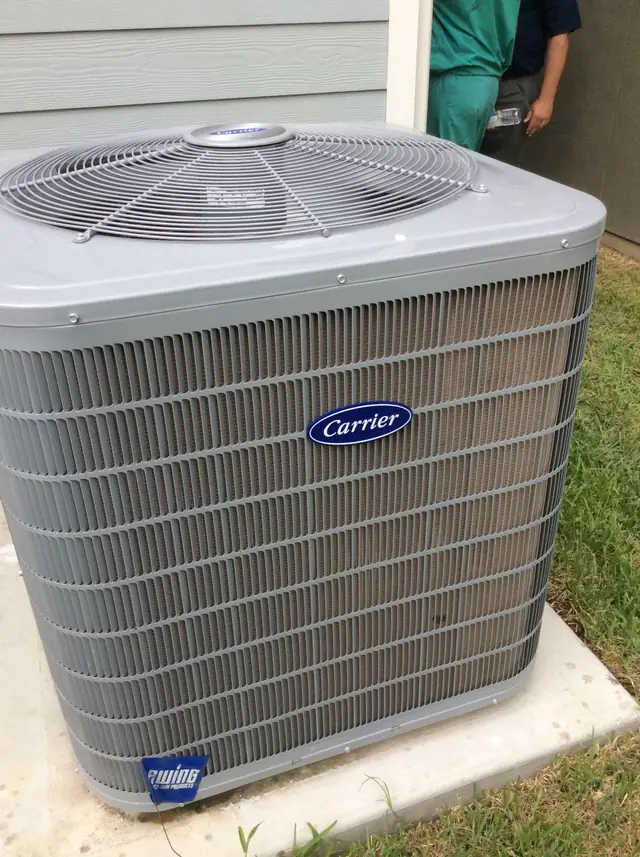
Most homeowners in The Woodlands think about their HVAC system as the unit outside and the thermostat on the wall. The ductwork connecting them to the rooms in the house is invisible, sealed behind drywall and insulation, and rarely thought about until something obvious breaks. But duct problems do not announce themselves with a breakdown. They show up as higher electric bills, rooms that never quite get comfortable, and a system that runs longer than it should.
Uneven Temperatures Room to Room
If one bedroom is 72 degrees and another is 78 with the same thermostat setting, the problem is usually in the duct, not the equipment. Common causes: a partially collapsed flex duct in the attic (the inner liner separates from the outer jacket and bunches up, choking airflow), a disconnected boot where the duct meets the ceiling register, or a branch run that was undersized when the house was built and has never delivered its rated airflow.
The fix depends on the cause. A collapsed duct gets replaced. A disconnected boot gets reattached and sealed with mastic, not duct tape. An undersized run might need to be upsized, or a balancing damper upstream might be partly closed and just needs adjustment. The point is that the AC is not the suspect here. It is doing its job. The distribution system is losing the output before it arrives.
High Electric Bills with No Obvious Cause
In southeast Texas, cooling is typically 40 to 60 percent of a summer electric bill. If that bill climbs year over year and the equipment has not changed, duct leakage is one of the first places to look. The Department of Energy estimates that the average home loses 20 to 30 percent of conditioned air through leaks, holes, and poorly connected duct. In a Texas attic that reaches 140 degrees in summer, every cubic foot of cooled air that leaks into that attic space is replaced by 140-degree air pulled back into the return side of the system. The AC now has to cool that superheated air down, which means longer run times and more kilowatt-hours.
A duct leakage test (called a duct blaster test) measures exactly how much air the system loses. A technician pressurizes the duct to a standard pressure and measures the airflow required to maintain it. The result is a number in CFM25 (cubic feet per minute at 25 pascals of pressure). Lower is better. A tight system leaks under 4% of total airflow. A bad one leaks 25% or more.
Dust That Keeps Coming Back
Duct leaks on the return side of the system pull air from wherever the duct runs. In an attic, that means insulation fibers, dust, and whatever else is floating around up there. In a crawlspace or belly (common in mobile homes), it means soil dust, moisture, and potentially mold spores. If you change your filter regularly and the house still gets dusty within a few days, the return duct is pulling unfiltered air into the system. The filter only catches what passes through it, and return-side leaks bypass the filter entirely.
Condensation on Ducts or Registers
In The Woodlands, outdoor humidity regularly exceeds 80%. If duct insulation has degraded or been damaged, the cold metal or flex duct surface contacts that humid attic air and sweats. You might see water stains on ceiling drywall near registers, or moisture dripping from a supply boot. Left alone, this becomes a mold problem. The insulation on the duct is not decorative. It is a vapor barrier and a thermal barrier, and when it fails, both moisture and heat transfer accelerate.
Noisy Operation
Ductwork should be mostly silent. If you hear rattling, popping, or whooshing when the system kicks on, something is loose, undersized, or damaged. Sheet metal duct pops when it expands and contracts with temperature changes. That is called oil-canning and it usually means the duct gauge is too thin or the run is too long without support. Flex duct whooshes when it is kinked or compressed, forcing air through a smaller opening at higher velocity. Rattling can be a loose damper, a disconnected hanger strap, or a section of duct vibrating against framing.
- Popping or banging when the system starts: sheet metal expansion, usually fixable with stiffener channels or additional hangers
- Whistling at one register: the damper behind the register may be almost closed, or the flex run is kinked in the attic
- Steady hum from the trunk line: normal at moderate airflow, but a loud hum indicates velocity is too high for the duct size
- Rumbling from the plenum: the connection between the air handler and the main trunk may be loose or the plenum box itself may be undersized
What a Duct Inspection Covers
A proper duct inspection is not a visual glance through the attic hatch. It covers the full trunk and every branch run, checking connections, insulation condition, duct support, and airflow at each register with an anemometer or flow hood. The return side gets the same treatment. The technician is looking for disconnections, tears, crushed sections, failed insulation, improper connections (duct tape instead of mastic and clamps), and any run that was modified after the original install without being properly sealed.
AOT Mechanical handles duct work replacement for residential, commercial, and mobile home customers across The Woodlands. They have been doing it since 2009. If your system runs all day and the house never quite gets there, the equipment might be fine. The problem might be between the equipment and the rooms. Call (281) 883-9972 to get the duct checked.
AOT Mechanical · (281) 883-9972
Call (281) 883-9972More articles
When Your AC Stops Mid-Summer: What to Check Before Calling Anyone
A few minutes of checking the obvious can save you a service call, and knowing when to stop keeps you from making things worse.
Why Backup Generator Sizing Matters More Than You Think
A generator that is too small will not keep your AC running, and one that is too big wastes fuel and money for capacity you will never use.